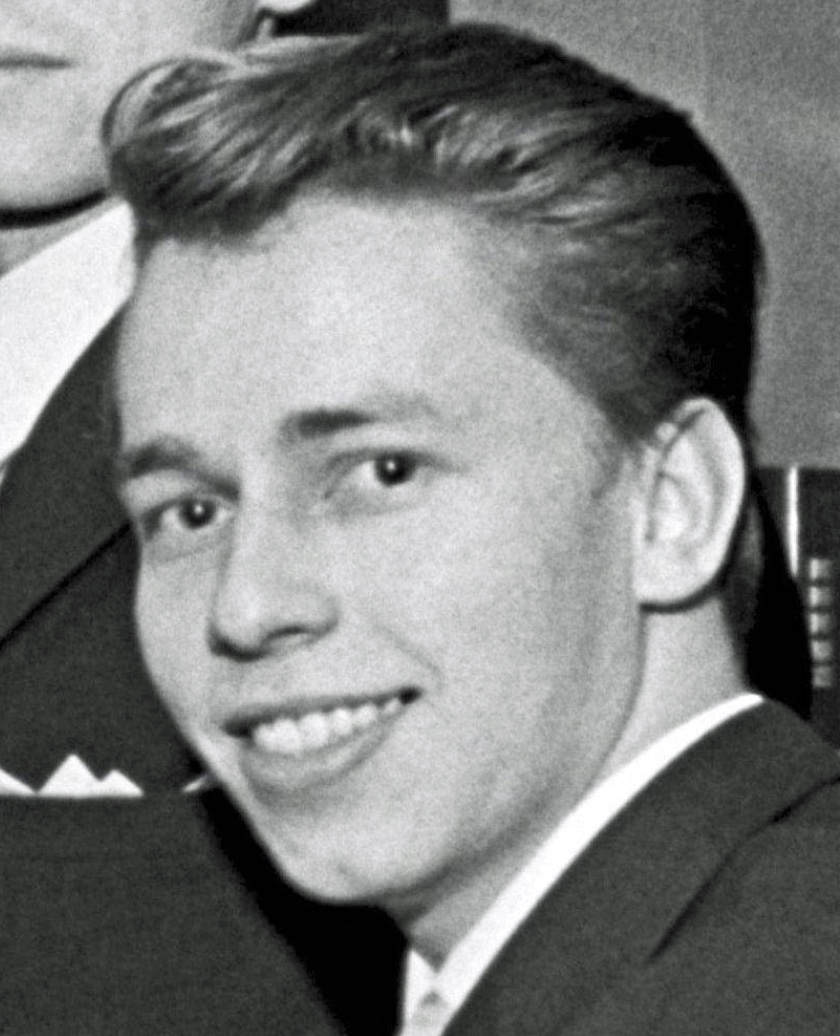
Finland. A country synonymous with snow, reindeer, and racing drivers. The subject of Monty Python’s famous song has an impressive record in punching above its weight, boasting four F1 titles, eight World Rally Champions and even an impressive racetrack of its own; The FIA Grade 1 Kymiring which opened in 2019.
Yet Finland’s most iconic motorsport contribution is not found in stats alone, nor is it in the country’s premier racetrack or even the 1000 Lakes Rally. It’s greatest legacy has always been the “Flying Finn.” A title taken by many of its most famous motoring sons, including Kimi Raikkonen, Hannu Mikkola, and Tommi Makkinen.
But while its main routes shall always date back to the 1960’s and 70’s when Finland first came into the international rallying scene, there’s one driver who has a greater argument than many to be the original Flying Finn not of rallying but of the racetrack.
This is the remarkable yet forgotten story of a maverick who bested the likes of Pedro Rodriguez, Ronnie Peterson and Ferrari itself. I hope you enjoy.
Leo Kinnunen’s journey into motorsport began as conventionally as it could’ve for a wannabe motorsport star hailing from Finland. His first forays aren’t exactly well documented, but we do know it was rallying where he came to the fore throughout the 60’s in Finland’s domestic rallying scene. It didn’t take long for Kinnunen to build a reputation as a star of the future, narrowly losing out to Pauli Toivonen in 1967’s Finnish Rally Championship. Try as he might though, up against the likes of Toivonen in rallying perhaps Kinnunen knew he couldn’t beat the established order. And so Kinnunen looked across to the one discipline he hadn’t yet tasted: the racetrack itself.
Unable to best his Scandinavian contemporaries, Kinnunen needed a new stage to settle on, and it came in the form of an unlikely, startup racing series. Inspired by the recently conceived Canadian-American Challenge Cup that placed an emphasis on improvisation and flaunted a devilishly simple rulebook, Scandinavia played host to the Nordic Challenge Cup.
It was a series almost cast especially for Kinnunen to launch his career. Only run once, over three races in 1969, the field was meagre in number yet a closer look at the entry list showed it to be far more enticing. Headlined by that year’s Le Mans winner and future CanAm champion Jackie Oliver, it also featured Jo Bonnier, Brian Redman, Masten Gregory, Richard Attwood and Herbert Muller.
Works teams snubbed the new series, meaning Kunninen would have to scavenge a drive for himself as he had no such affiliation with, say, Scuderia Fillipinetti or Team VDS. Not that this particular hurdle would turn out too difficult to jump. Enter a fellow Finn by the name of Antti Aarnio-Wihuri, who had recently snapped up what was now an ex-works Porsche 908 – specifically chassis 011 – to enter the new series with. With the eligible model and the rest of the team formed, their only issue had been replacing Pauli Toivonen who’d competed for them at two sportscar outings at the Solitudering and Mugello and Antti, having backed Kunninen’s career for the past two years gave him the seat.
Now installed in his first true sportscar, just how would Kunninen cope with a whole new style of racing?
By jousting Jochen Rindt for the win in his first ever race. On home soil at the now defunct Keimola Motor Stadium the fresh-faced Fin pressed the Austrian all the way through proceedings, and only conceded victory by a mere seven tenths of a second. Talk about making an impression. Admittedly the result was not without a slight caveat, as only three cars started owing to the organiser’s failure to pay out the promised prize money.
Even so, Leo never looked back. Dominating both remaining rounds of the championship, at Mantorp Park and Andersdorp – now with full-size grids – Kunninen stormed to his first ever tarmac title. In a championship filled out with Lola T70s and an array of other less powerful cars Kunninen had incidentally aided Porsche’s own image in his native Finland, enough to be awarded with a test with the works team and one of the most famous cars ever built – The Porsche 917.
This is where his talent truly came to the fore – again, as with the 908, he’d never driven the 917 before he hit the track at the Oesterriechring in front of Porsche’s engineers and top men. There, he proved that even in the warmer European climate he could hustle a prototype faster than almost anyone. Even Helmut Fiedl, one of the engineers at the track with Kinnunen said of the young talent “He threw the cars into the corners like the devil himself, in true rally style.”
Word quickly reached the established privateers with whom Porsche trusted to run their cars, most notably John Wyer’s outfit. He’d just won Le Mans with Jackie Ickx and Jackie Oliver with a Ford GT40 but with the garage doors closing on the American legend for 1970 and Wyer’s lack of faith in the Blue Oval’s new P68 the man who’d engineered back to back Le Mans wins sought new allegiance.
It came in the form of Porsche, and with Pedro Rodriguez signed on for 1970 and Wyer in need of a second driver, when word came in of this new hotshot from Finland, Wyer placed his trust in Kinnunen. In six months the Fin had gone from absolute nobody to finding himself a part of what was effectively Porsche’s works team.
To say he’d find himself hurled into the thick of it simply wouldn’t be doing it justice: His first race with the team would be the arduous 24 Hours of Daytona. But if there’s one area Kinnunen arguably couldn’t be beaten it was laying down the gauntlet at the first time of asking, even if he was racing at a car/track combination alien to him.
It wasn’t the perfect start, however. Ferrari clinched pole in mixed conditions with their new 512S of Mario Andretti, Arturo Mezario and Jacky Ickx but that was the only thing that stood between the Porsches and clear air. JWA’s new 917s qualified 2nd and 3rd, with Kinnunen – sharing the car with Rodriguez and Brian Redman, who was tasked with aiding both cars throughout the 24 Hours – behind the sister car of Jo Sifftert. The two works Matras showed no threat in qualifying, and with the Ferraris expected to hit teething troubles with their brand new machinery Porsche were by far the favourites.
Aligning with this theme, Andretti’s Ferrari faltered and the new cars would prove unable to challenge the sturdy engineering masterminded by Wyer. by the time they came off the infield and from there it was a straight duel between his two cars. And while they ran line-astern for the first three hours, the tide turned when Sifftert hit debris and pitted, handing Rodriguez and Kinnunen a lead that they would never relinquish, in fact you really could call it a Sunday drive, the duo having won by 45 laps. Now admittedly Rodriguez was the star man, and as such the car had been engineered specifically for him, and he also drove double the hours of his teammate. But Kunninen’s stints still proved excellent enough to steer the 917 to its first ever 24 Hour victory.
It was testament to the ability of both, but more significant for Kinnunen. In the months previously he’d had pace and pace only. Now he had not only Porsche’s first ever 24 Hour race win to his name, but the respect of his peers and of the paddock. Never mind that they organisers had mistaken his nationality, with the Swedish flag flying from the 917 on the victory lap, Kunninen was in the palm of Porsche, and they were all the happier to have him.
But as historically significant as that was, and while it was the race that elevated both in the eyes of their employers it would not prove to be their finest hour.
Throughout 1970, the duo would take four wins to match the tally of Sifftert and Redman but it was at Brands Hatch where Rodriguez steered his 917K for over five-and-a-half hours to win by five laps in a drenched track. Kinnunen only needed to drive an hour as the Mexican came good in arguably his best performance ever.
At that year’s Targa Florio it was a case of role reversal, as though they didn’t win it was Kinnunen’s turn to clutch in place of his teammate. He and Rodriguez were planned to enter the race together, but the Mexican fell ill shortly before the race and was only just fit to drive. Undettered by the circumstance and likely knowing that as Rodriguez would not be fully sharp he’d lose the duo time, Kinnunen employed the skills and techniques of his early rallying days with full vigour, and when he came in after his four lap stint – the only other car to extend their first stint in this way was driven by another man with rallying experience, Bjorn Waldegaard – he set a lap new lap record on his way back to the pits, well in the lead ahead of the sister JWA Porsche of Jo Sifftert. Rodriguez took over and as expected dropped back considerably, though while back in fourth he and their #40 still led on time, and fighting his illness as well as the car he pulled in one lap early. With Kinnunen now installed once again, and having already broken the lap record he was now determined to pull through for his teammate and take top honours, but that would be a tall order. Yet for ‘Leska’ the 72km circuit may as well have been a long rally stage and as such it played perfectly into his hands. His valiant charge over the last stint saw him surge back up to second overall, and while they may have salvaged a 1-2 for Porsche in the dying moments incredibly finishing just 1 minute and 42 seconds behind, Kinnunen’s real – and eternal – achievement was his drive itself. Had Rodriguez been fully fit and racing at his usual level there’s every chance they might’ve won the Targa Florio that year but in storming from fourth to second Leo Kinnunen had set the Piccolo Circuit track record. On his last lap he registered a time of 33 minutes and 36 seconds, almost 40 seconds faster than anyone else had ever gone.
For 1971 however Kinnunen’s racing efforts turned to an all-new series, emerging from the ashes of the place he’d crafted his name. Despite the various logistical issues, while the Fin had been fighting Ferrari and Alfa Romeo in the World Sportscar Championship, the Nordic Challenge Cup had strongly resonated with those seeking a ‘European Can-Am.’ Now named the Interserie, it acted largely as a far more appealing alternative than the British dominated European Sportscar Championship that was largely comprised of privateer Chevrons and Lolas previously used in the 2-litre class of the WSC. Interserie instead welcomed more powerful and more relevant machinery of the day, which saw Kinnunen reunited with his old AAW racing stable.
AAW had themselves run a largely invisible effort during the 1970 World Sportscar Championship with Gijs Van Lennep and a close friend of Kinnunen’s, Hans Laine, and with the Porsche superstar in need of a drive having been dropped from John Wyer’s team he called in a favor.
Now back with his former employer, and with both now experienced in the 917K, Kinnunen found himself now duelling a much slimmer field of cars. With Ferrari only attending the opening round in Imola, and Alfa also hesitant to commit to the championship Kinnunen and AAW were on largely equal footing with the other privateer teams. But with the entry lists fickle and the quality of field virtually a pendulum depending on the individual round Kinnunen was easily the faveourite, and it showed. On debut, Kinnunen was a modest third and best placed of the Porsche runners as Arturo Mezario won in the works Ferrari. But satisfied with victory on home soil the Scuderia would only return for the 500 mile contest at Imola later that same year. Consecutive second-places at Zolder and Hockenheim saw the Finn climb into a comfortable championship lead, and once again he was proving his worth. It may not have been in the World Sportscar Championship as he’d desired, but this was as good as anything. Things were looking up for the Finn, there was finally a chance at AAW finding a consistent home.
Then came the Norisring.
A meagre two-and-a-half mile long street track nestled in the middle of Nuremburg, and with just 8 corners the Norisring had held its first races back in 1948, but the arrival of sportscar racing in 1968 had seen the track explode in popularity and the Interserie arrived in 1971 for its second visit. This being a street track back in the 70s, and in the days before safety was taken as a priority little thought was given to the idea of some of the fastest cars in the world tearing their way about a circuit woefully unequipped to facilitate any accidents that might occur at speeds of up to 200 miles per hour. The result was tragedy, and one that hit close to home for Leo Kinnunen.
Pedro Rodriguez, contracted still to Porsche in the World Sportscar Championship pairing Jackie Oliver in the works 917, had been hired by Interserie regular Herbert Muller’s team to contest that weekend in an ex-works 512. Having qualified second in a familiar car – he’d competed for NART in Can-Am the previous year – and a familiar track, just two tenths behind polesitter Chris Craft he’d stormed into an early lead after a close duel with the Englishman, and by the fifth circumference was closing in on the slowest runners to lap them. He looked set to take a tidy, dominant win before travelling with the works BRM squad to the British Grand Prix a week later.
He’d never arrive.
On lap twelve, Rodriguez spun exiting the infamous ‘S’ curve, colliding with the barriers and the car caught fire, Rodriguez would never be revived.
On lap thirteen, Kinnunen withdrew his car out of respect for his former teammate.
The relationship between the two was never perfect – In 1970 John Wyer’s team hadn’t exactly made their preferential treatment of the Mexican discreet – but whenever they came together something magical had happened in that season. As Kinnunen and the world mourned Mexico’s greatest driver Interserie was forced to continue on in the wake of the tragic weekend that had just come to pass, and as it happened that next race only ramped up the emotions for the Finn.
The championship returned to a track close to Kinnunen’s heart – Keimola, in Finland. To make matters more emotional, that was where for the first time, Kinnunen won in the Interserie. And while in that race only 8 cars started, among them were the likes of Teddy Pilette, Peter Gethin and Helmut Kelleners. It may not have been such a field as in the earlier round at Imola, for instance, but Kinnunen indeed took a grand-slam at his home track. In the wake of Rodriguez’s death, it was what he needed. Consistency had been his greatest asset in the series, and he’d be one of only three drivers – the others being Jugen Neibelhaus and Micheal Weber – to contest all seven races. It was this consistency of his races that assured him after fourth place at Imola (this one being 500 miles) and third at Hockenheim that claimed him the 1971 Interserie Championship. It may not have been an FIA World Championship – a title for drivers would only be established in 1981 – but it was a driver’s title no one could take away from Kinnunen, and was excellent publicity for Porsche themselves.
And while 1971 had been something of a modest year for AAW in their first foray into the Interserie, 1972 would see the team – and Kinnunen – rise to their absolute peak.
An expanded calendar of nine races, plus the arrival of Howden Ganley’s works BRM P167 and two new races at the Nordschliefe should’ve by all means kept AAW in check. And at the start of that campaign it very much suggested that’s what would follow. Ganley and the BRM won on debut at the Nordschleife, with Kinnunen back in fourth behind eventual rival Willi Kauhausen, while an engine failures at Imola and Silverstone further hampered him. Victory in Silverstone did look to keep him in the picture but with five races left there was no suggestion he and AAW would find their richest vein of form yet.
But then Kinnunen won at Hockenheim. And then again at the Norisring where a year earlier his former teammate had perished. And then again by a margin of three laps at Keimola. Reinhold Joest threatened his streak, but Kinnunen saw him off in a close duel at the Nurburgring – just – before taking a fifth consecutive win at Hockenheim. When the final results sheet was printed off, by points tally alone he’d obliterated the competition.
And having won consecutive titles and established themselves as the ultimate team to beat in Interserie, their fight for a hat-trick of titles in as many years would place many a target on the teams’ back.
But, with this being an all-Finnish team, they pretty much shrugged it off.
German Willi Kauhausen would initially look to be Kinnunen’s usurper by besting him at the opening two rounds of the season at Imola and the Nurburgring but in scoring consecutive grand slams at Silverstone and the Norisring Kinnunen flipped the tables once more. From there Kauhausen faded and Kinnunen held on to his crown for a third straight year, and at the season finale a chorus of boos targeted the Finn, having claimed his third successive title in front of Kauhausen’s 80,000 strong home crowd at Hockenheim.
When the laurel wreath was placed over him, ‘Leska’ was all smiles.
It seemed the man had nothing left to prove, having demonstrated such mastery of one of racing’s wildest prototypes and a 24 Hour race victory under his belt. Just where in the racing world was left for such a perfect combination to take?
It was a pretty obvious answer, all things considered.
Back in his junior career, Kinnunen had proved his mettle in F3 machinery back in his homeland. At one outing at the undulating Ahvenisto circuit he’d duelled a young Ronnie Peterson – and won. Of course, any aspiring driver today would require a far more extensive CV in the lower rungs of the F1 ladder but this was 1974. With the Concorde agreement still 8 years away, anyone with the necessary funds could just turn up and give it a shot. Kinnunen was one of these ‘have a go heroes’ but his F1 stint would prove rather unbefitting of his talent.
1974 wasn’t his first attempt at landing a single-seater gig. During his time at Porsche he’d struck up a friendship with fellow Porsche works driver Jochen Rindt, who before his untimely death had been helping Kinnunen find a seat with Lotus. Perhaps if Rindt had worn his seatbelt on that fateful day at Monza the negotiations would’ve been successful. As it was, all F1 talk dried up in the aftermath of Italy and thus Kinnunen had ended up in the Interserie.
But after a supposed Can-Am campaign fell through, and F2 plans came to nought, Kinnunen was informed that not only was he out of a drive, but the entire AAW operation was to shut its doors prior to 1974.
Now left almost at the altar, Kinnunen’s desperate search for another outlet for his thirst of racing led him to John Surtees. Since leaving BRM at the end of 1969, John had been running his own cars under the Team Surtees banner. Engineering their own cars in house, it was by no means the March of its day but customers had on occasion leased spare cars from John. That’s exactly what at first glance seemed to save Kinnunen’s F1 ambitions.
Having started his search long into the off-season, and with all the competitive drives snapped up Kinnunen signed a deal with John to lease a single T16 chassis which he believed to be a good car…until he saw it in person for the first time at the Belgian Grand Prix of that year. Out loud he exclaimed that “No one is going to do well in it.”
He was right, too.
Derek Bell failed to qualify in it, neither Jochen Mass, Carlos Pace or John Watson could drag it to more than a single points finish between them and save for two non-championship podiums, the car was a complete disaster.
The problem was that this specific car was an out-of-date, cumbersome test chassis Surtees had no use for, and AAW were the unfortunate punters who couldn’t say no.
Immediately, things went wrong for Kinnunen’s fledgling outfit. Arriving in Belgium for the 5th round of the 1974 season at Nivelles they discovered a multitude of maladies. Chief among them was their sole mechanic, sold to them by Surtees, who had installed the gearbox incorrectly. Thus, the T16 still racing under the AAW name despite the closure of the sportscar team lasted only one installation lap. Entering the pits, Kinnunen shifted down to first and the engine died there and then. In a field of 31 cars – in those days the maximum number of entries was entirely at the organiser’s behest – Kinnunen would be the only car barred from taking the start. Matters weren’t helped over those two days of practice by the changeable conditions that caught out most of the teams that weekend.
Having forgone Monaco for a chance at the Swedish Grand Prix at an upgraded Andersdorp facility there was initial promise, as tests in Finland had coaxed life and speed out of the chassis. Scandivanian backing saw the car gain increased sponsorship and while the money was crucial for the team’s long-term survival, results didn’t follow it up. Though they managed to set a time and indeed qualify for the race in 25th (and just one tenth faster than Vern Schuppan’s Ensign) they got 8 laps out of the T16 before it gave up the ghost. Still, reliability was a lottery back then and they had managed to put on some kind of a show for the Fins in the grandstands. Or at least, that’s what the crowd thought. In reality, their race had been doomed from the start, after one of the mechanics confessed to Kinnunen that he’d cross-wired the sparkplugs and correctly predicted they’d only be able to run eight laps or so. And so what should’ve been a minor moment of celebration, a signifier of progress for the team turned into Operation: Hide The Truth. Kinnunen would later admit that he couldn’t really enjoy sitting on the F1 grid knowing the outcome and though on another day he might’ve taken Jochen Mass and a few others into turn one he was too ashamed to interrupt their races in doing so.
Moving south into France for the race at Dijon, a track famed for its high speeds and unusually quick lap times. 55 seconds was the target for the teams, and in qualifying a so called ‘under 60 second club’ formed for those fast enough to slip into the sub minute lap times. Kinnunen would not be a part of this, in fact he wouldn’t be permitted to practice on Friday owing to FOCA exercising their muscle. Predictably in qualifying the T16’s performance suffered from this, and despite running on the Saturday after the rumbling factions had set aside their differences would only be able to score 29th, seven places outside the 22-car cut-off.
Two races remained in the short F1 career of Leo Kinnunen, though Austria could’ve been a turning point on another day. With a new rear wing fitted, according to the man himself the car was responsive and handled well into the long, winding corners of the Oesterrichring. They even managed to outdo Derek Bell’s works Surtees in qualifying, with a 1.39.47, just six tenths off making the race. As it was, another Surtees of Dieter Quester would hold that final spot.
Italy would be where Kinnunen’s F1 Circus finally gave way, and a circus of embarrassments it truly had been and would be on the final weekend and his career would end on a virtually identical note. An unfortunate victim of burglary in the paddock, having had their tyres nicked, they qualified dead last, and nearly two seconds behind Chris Amon’s own car to forget, the forgotten AF101, in 31st place.
And that was that for Kinnunen’s F1 dream, as AAW folded for good in 1974, the F1 stint largely contributed in killing his career as a whole.
Two years back in the comfort of the World Sportscar Championship followed as Martini welcomed him back with open arms. Just for fun, the Finn closed out 1974 with one more Interserie race win, beating Willi Kauhausen one last time for good measure. Interserie itself had been largely unchanged as a series, except for the face that the races were far shorter. Indeed, in the final round of ’74 Kinnunen ran a mere 20 laps before the race was over.
That performance alone proved that the F1 struggle was a machinery issue and by no means that one of driver, and that Martini were all the merrier to have him back for 1975. Contesting just the European rounds, Kinnunen’s form noticeably slumped and his only podium would come at that year’s 1000km race at the Nurburgring, as the Alfa Romeo works team snatched the batton from Porsche.
Who ran that Alfa effort? One Willi Kauhausen.
One last year remained for Kinnunen, in the newly created World Championship of Makes, essentially a international sportscar series sanctioned by the FIA that limited its entries to just touring and GT cars. For this inaugural season Kinnunen found a drive for German privateer Egon Evertz’s eponymous team in the European rounds once again. With the privateer effort lacking the proffesionalism and Evertz himself being no Pedro Rodriguez they struggled for results and one last Le Mans attempt ended 11 hours into the run, as the 2.1 litre flat six in their 908 gave up the ghost. Podiums at Mugello and Silverstone were still admirable showings, while a runner-up finish at that year’s Watkins Glen 6 hour race was no doubt the highlight of a rather uncharacteristically winless year for Kinnunen. It would also be his last event too, as for the second time in his career Kinnunen’s team ran out of funds.
After competing in a single weekend of the DRM, and one last privately funded attempt at the Nurburgring 1000km race Leo Kinnunen would call it quits on circuit racing at 34 years of age. From there he returned to his roots, and though he never claimed the Finish Rally Championship that had escaped him so in 1967 he did compete regularly for the final few years of his career, even taking a second win at the Arctic Rally in 1979 before hanging up his racing gloves for good after one last attempt at the 1000 Lakes Rally in 1982.
I find it rather a shame that his career faded in the way it did. Kinnunen himself seemed typically Finnish in nature; comfortable in keeping to himself, and gave very little away as far as interviews or reflections were concerned. The conscious decision to return to his rallying roots felt like rather a natural and fitting finale to what had been an incredibly successful career, all things considered. Still, the idea there was more to achieve still lingers. What if 1974 hadn’t started so terribly, could he and AAW captured yet more glory in F2 and Can-Am? If he hadn’t been so hampered by money troubles, how much further could he have gone?
One can only wonder.
But in Kinnunen’s own, wistful words: “nobody can do anything about the fact that I was the first Finnish driver in grand prix racing.”
In today’s world, the exploits of the explosive fin are largely forgotten, but he does have one legacy that will live on forever. The original Flying Finn was the last man to wear an open face helmet in Formula One.
image credit: By Ensio Ilmonen, Lehtikuva Oy – http://www.is.fi/formula1/art-2000005304355.html, Public Domain, https://commons.wikimedia.org/w/index.php?curid=61318967
No responses yet